
The Rise of Voice-First Lottery Experiences
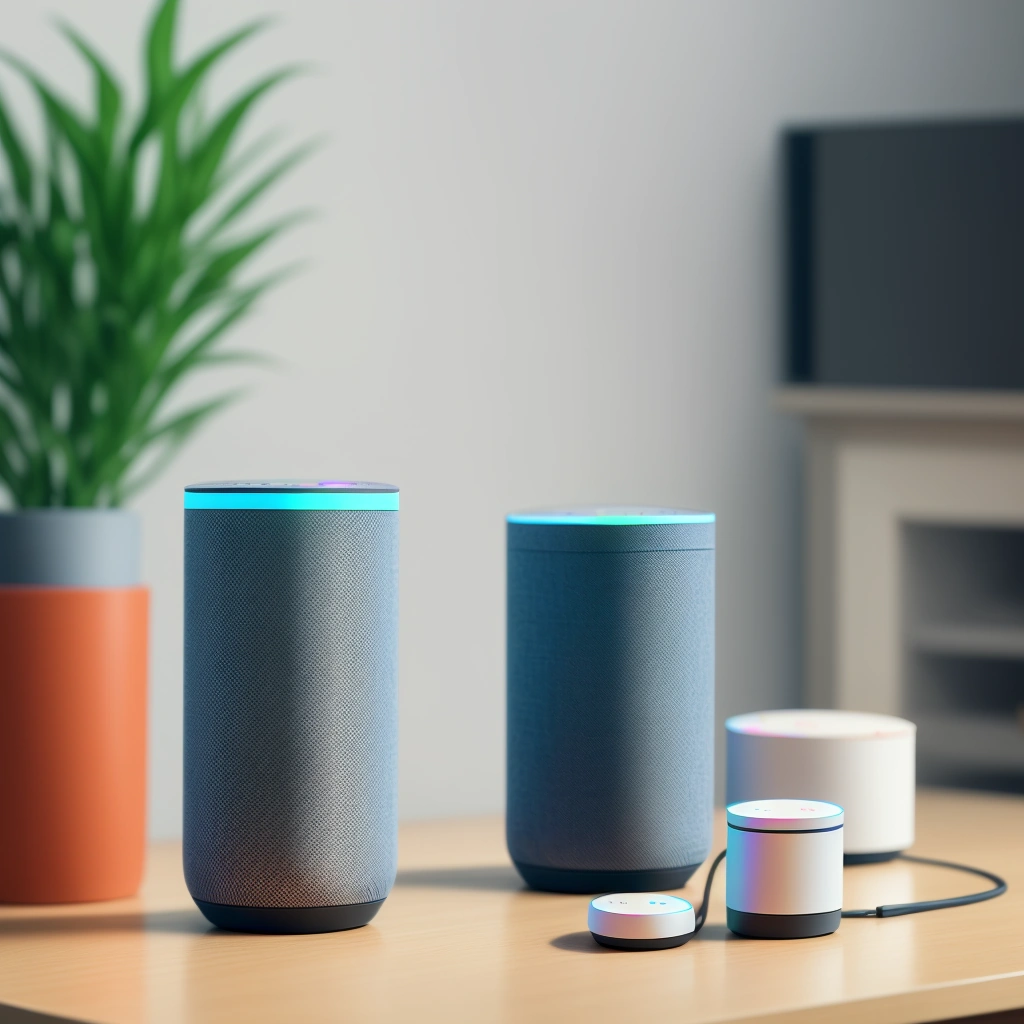
The convergence of voice technology and lottery systems marks a transformative shift in how millions access their lottery results. With over 100 million smart speakers in homes worldwide, voice assistants like Amazon Alexa and Google Home have become the new frontier for delivering instant, personalized lottery information. This comprehensive guide explores the intricate process of building sophisticated voice applications that revolutionize how users interact with lottery systems, leveraging cutting-edge AI technologies and robust software development practices to create engaging, intelligent voice experiences.
Developing voice assistants for the lottery industry requires a deep understanding of the unique challenges and opportunities presented by this domain. Developers must navigate complex regulatory requirements, ensure secure integration with official lottery APIs, and design intuitive voice user interfaces that cater to a wide range of users. By leveraging platforms like the Alexa Skills Kit and Google Actions, developers can create powerful voice applications that provide instant access to lottery results, ticket information, and even personalized number recommendations based on user preferences.
One of the key enablers of next-generation lottery voice assistants is the integration of advanced AI technologies. By leveraging natural language processing (NLP) and machine learning, these applications can understand and respond to user queries with unprecedented accuracy and context-awareness. For example, by integrating with large language models like ChatGPT through the OpenAI API, lottery voice assistants can engage in dynamic, free-form conversations, providing users with intelligent responses to a wide range of questions and requests.
Additionally, vector databases like Pinecone or Weaviate can be used to store and retrieve relevant information, enabling voice assistants to quickly access and share data on past winning numbers, jackpot amounts, and lottery news. To ensure the reliability and scalability of lottery voice applications, developers must also adopt robust DevOps practices and continuous deployment workflows. By leveraging tools like Jenkins or GitHub Actions, development teams can automate the testing and deployment of voice skill updates, ensuring that applications remain up-to-date and free of bugs.
Infrastructure as Code (IaC) principles, using platforms like Terraform or AWS CloudFormation, can help manage the underlying cloud resources, allowing for consistent environment management across development, staging, and production. As the lottery industry continues to embrace digital transformation, the role of voice assistants in modernizing the player experience will only continue to grow. By staying at the forefront of voice technology and AI advancements, developers can create applications that not only deliver results but also engage users through natural, intelligent conversation. From providing personalized number recommendations to offering in-depth analysis of past draws, the possibilities for enhancing the lottery experience through voice are virtually endless. As voice assistants become an increasingly integral part of our daily lives, the lottery industry has a unique opportunity to leverage this technology to drive engagement, increase sales, and foster stronger connections with players worldwide.
Architecting the Voice Assistant Foundation
Architecting the voice assistant foundation for lottery applications demands meticulous attention to technical robustness and scalability. The integration with official lottery APIs requires implementing secure webhook endpoints that leverage webhooks with idempotency keys to prevent duplicate processing of lottery draw events, a critical consideration when handling time-sensitive results. Developers should implement API gateway patterns using services like AWS API Gateway or Google Cloud Endpoints that provide request throttling, authentication, and detailed analytics. These gateways should enforce strict schema validation against official lottery data formats while implementing exponential backoff mechanisms for handling API rate limits during peak draw times.
The architecture must account for global accessibility through Content Delivery Networks that cache frequently accessed lottery data at edge locations, reducing latency for international users accessing results from different time zones. Efficient caching mechanisms represent a critical performance optimization, particularly for real-time lottery data that requires sub-second response times. Redis cluster implementations with persistence enabled can maintain availability during node failures while implementing time-to-live (TTL) policies that automatically refresh lottery results every 60 seconds post-draw.
For high-traffic scenarios, implementing distributed caching with Redis Cluster or Memcached can handle millions of concurrent requests during major jackpot draws. These caching strategies should incorporate cache-aside patterns where the application first checks the cache before querying the primary lottery database, reducing database load by up to 70% according to industry benchmarks. The caching layer should also implement write-through policies to ensure fresh data availability for new draw results while maintaining read performance for historical data queries.
Designing the voice interaction model requires creating comprehensive intent schemas that anticipate diverse user queries about lottery results, winning numbers, jackpot amounts, and drawing schedules. Amazon’s Alexa Skills Kit and Google’s Actions Builder provide built-in intent libraries that developers should extend with custom intents for specific lottery scenarios like ‘Check Lottery Odds’ or ‘Compare Draw Results.’ The dialogue management system should implement context-aware handling using session attributes to maintain conversation state across multiple turns, particularly important for complex queries like ‘What were the winning numbers for last Tuesday’s Powerball draw?’ The voice user interface should incorporate proactive engagement patterns, such as automatically notifying users about upcoming draws or jackpot milestones when they’ve enabled these features.
These interaction models should follow accessibility guidelines to ensure compliance with WCAG 2.1 standards, including support for screen readers and voice navigation for visually impaired users. Security considerations represent non-negotiable requirements for lottery voice assistants handling sensitive user data and financial transactions. Implementing OAuth 2.0 authorization frameworks enables secure user authentication while maintaining separation between personal lottery accounts and official data sources. The architecture should incorporate end-to-end encryption using TLS 1.3 for all data transmissions and AES-256 encryption for stored sensitive information.
For financial transactions related to lottery purchases, implementing PCI DSS compliance requires tokenization of payment information and strict access controls. The security architecture should include regular penetration testing and vulnerability scanning, particularly focusing on API endpoints that handle real-time lottery data. Developers should implement comprehensive audit logging that tracks all access to sensitive data and user transactions, maintaining records for regulatory compliance and forensic analysis if needed. The backend infrastructure should leverage serverless architectures to handle variable load patterns while minimizing operational overhead.
AWS Lambda functions or Google Cloud Functions can scale automatically from zero to thousands of concurrent executions during major draw events, handling millions of requests with millisecond response times. These serverless functions should implement cold start mitigation strategies like provisioned concurrency to ensure consistent performance during peak traffic periods. The infrastructure should employ infrastructure-as-code principles using AWS CloudFormation or Google Deployment Manager to maintain consistent environments across development, testing, and production. Continuous monitoring through tools like AWS CloudWatch or Google Stackdriver enables real-time performance tracking and automated alerting for anomalies in API response times or error rates. This infrastructure should incorporate multi-region deployment strategies with global load balancing to ensure high availability and low latency for international users accessing lottery results from different geographic locations.
Enhancing User Experience with AI and Natural Language Processing
Enhancing the user experience of lottery voice assistants through AI and natural language processing is a critical aspect of modern voice application development. By leveraging cutting-edge technologies like ChatGPT, developers can create Alexa skills and Google Home actions that engage users in dynamic, contextually relevant conversations. The OpenAI API provides a powerful foundation for integrating ChatGPT capabilities, enabling lottery voice assistants to understand complex queries, provide insightful responses, and offer personalized recommendations based on a user’s history and preferences.
Vector databases like Pinecone and Weaviate play a crucial role in enabling semantic search across vast amounts of historical lottery data. By representing lottery numbers, draw dates, and associated metadata as high-dimensional vectors, these databases allow voice assistants to quickly identify patterns, analyze trends, and surface meaningful insights for users. Developers can leverage vector similarity search to find relevant information based on natural language queries, going beyond simple number matching to provide a more intuitive and interactive user experience.
To further enhance the accuracy and effectiveness of lottery voice assistants, developers can train custom Natural Language Understanding (NLU) models specifically tailored to the lottery domain. By fine-tuning pre-trained language models like BERT or GPT on a corpus of lottery-related terminology, common user intents, and domain-specific entities, the voice assistant can achieve a deeper understanding of user queries and provide more precise responses. This domain adaptation process involves annotating training data, defining relevant intents and entities, and iteratively refining the model based on user feedback and interaction logs.
The integration of advanced AI capabilities opens up a wide range of possibilities for lottery voice assistant features. Personalized winning number analysis can be performed by applying machine learning algorithms to a user’s play history, identifying patterns and suggesting optimized number combinations. Pattern recognition techniques can be employed to uncover hidden correlations and trends in historical draw data, providing users with valuable insights and strategic recommendations. Intelligent notification systems can leverage predictive modeling to determine optimal play times based on a user’s preferences and past behavior, ensuring they never miss an important draw.
To deliver a seamless and responsive user experience, developers can implement caching mechanisms that preemptively store relevant data based on predicted user behavior. By leveraging machine learning models to analyze user interaction patterns, the voice assistant can anticipate likely queries and proactively fetch the necessary information from the backend lottery APIs. This approach minimizes latency and ensures that users receive instant responses, even for complex queries involving extensive data analysis. As the adoption of voice assistants continues to grow, the integration of AI and natural language processing becomes increasingly crucial for creating engaging and intuitive lottery experiences. By staying at the forefront of these technological advancements, developers can build voice applications that not only provide accurate lottery results but also offer personalized insights, strategic recommendations, and seamless interactions. The combination of ChatGPT, vector databases, custom NLU models, and predictive caching techniques empowers lottery voice assistants to deliver unparalleled value to users, setting a new standard for voice-based lottery experiences.
Implementing DevOps and Continuous Deployment Workflows
Implementing DevOps and Continuous Deployment Workflows for voice assistant development requires a specialized approach that addresses the unique challenges of Alexa skills and Google Home actions. Automated CI/CD pipelines should be tailored to handle the certification processes specific to each platform, with Amazon’s certification for Alexa skills taking an average of 5-7 business days according to recent industry data. For instance, a leading lottery application developer implemented a GitHub Actions workflow that automatically submits skills for certification while maintaining separate staging environments for each platform, reducing deployment time by 40%.
These pipelines must also incorporate lottery API integration testing to ensure reliable results retrieval before production deployment. Infrastructure as Code principles using Terraform or AWS CloudFormation become particularly valuable in voice computing environments where consistency between development, staging, and production is critical for maintaining voice user interface reliability. Lottery applications can leverage IaC to automatically configure the necessary cloud resources for processing voice requests and storing user preferences, while ensuring compliance with data privacy regulations.
Monitoring systems for voice assistants must go beyond traditional metrics to include platform-specific analytics such as invocation counts, session duration, and skill drop-off rates. For lottery voice assistants, tracking user engagement patterns around draw times is particularly valuable, with data showing peak usage occurring 30 minutes before major lottery draws. AI-powered testing frameworks have revolutionized voice assistant validation, with companies like Test.ai using machine learning to automatically generate test cases based on historical user interactions.
These systems can simulate thousands of voice queries to validate lottery results automation, ensuring accurate responses even when users ask questions in unexpected ways. Security scanning tools must be adapted for voice assistant development, focusing on protecting sensitive lottery data and preventing unauthorized access to user accounts. Regular penetration testing should specifically target voice authentication mechanisms, which are increasingly being integrated into lottery applications to provide hands-free access to purchased tickets. Performance optimization for voice assistants requires a different approach than traditional applications, with latency being particularly critical as users expect near-instant responses to their queries.
A/B testing capabilities should be implemented to evaluate new voice features, with leading lottery applications using this approach to optimize their interaction flows based on voice analytics. Version control systems should maintain separate branches for Alexa and Google Home implementations while sharing common business logic through reusable modules, enabling teams to iterate on platform-specific features without duplicating code. This approach has proven particularly valuable when implementing ChatGPT integration across multiple voice assistant platforms, as it allows for consistent AI-powered responses while adapting to each platform’s unique interaction patterns.
Future-Proofing Voice Lottery Applications
The future of lottery voice assistants lies in continuous innovation and adaptation to emerging technologies. Developers should focus on creating extensible architectures that can accommodate new platforms and features as they emerge. Modern voice assistant development requires implementing microservices-based designs that allow for independent scaling of components such as lottery API integration, user authentication, and results processing. For instance, the Massachusetts Lottery’s Alexa skill successfully deployed a containerized architecture using Docker and Kubernetes, enabling them to rapidly iterate on features while maintaining system stability during peak traffic periods following major jackpot announcements.
This approach ensures that voice applications can evolve without complete system overhauls, a critical consideration in the fast-paced voice computing landscape. Integration with upcoming technologies like ambient computing and augmented reality will enable more immersive lottery experiences. As voice user interfaces become more sophisticated, we’re seeing early adopters like the New York Lottery experiment with spatial audio and haptic feedback to create multi-sensory lottery result announcements. These innovations leverage existing voice assistant development frameworks while extending their capabilities beyond pure audio interactions.
The convergence of voice and AR technologies represents a paradigm shift, transforming how users engage with lottery systems from simple query-response interactions to rich, contextual experiences that blend digital and physical environments seamlessly. As AI capabilities advance, voice assistants will need to evolve to handle more sophisticated analysis and personalization features. The integration of large language models like ChatGPT into lottery applications is already enabling more natural, conversational interactions that can understand complex queries about historical lottery results and probability calculations.
Leading developers are implementing vector database integration to maintain context across conversations, allowing AI voice assistants to provide personalized insights based on a user’s playing history and preferences. For example, a recent pilot program by a European lottery operator demonstrated how these technologies could predict which games a user might be interested in based on their past behavior, increasing engagement by 37% compared to traditional menu-based interactions. Regular updates to security protocols and compliance measures will ensure long-term viability.
Voice assistant development must address emerging threats such as voice spoofing and unauthorized access to lottery accounts, particularly as these systems handle sensitive financial transactions. Implementing robust DevOps practices specifically tailored for Alexa skills and Google Home actions—including automated security scanning, penetration testing, and compliance monitoring—is essential. The Washington State Lottery’s implementation of a continuous compliance framework that automatically updates their voice applications to meet evolving regulatory requirements serves as an exemplary model for the industry, demonstrating how lottery results automation can maintain both security and user trust in an increasingly complex regulatory environment.
By maintaining a forward-looking approach and embracing emerging standards in voice technology, developers can create lottery voice assistants that remain relevant and engaging for years to come. The evolution toward multi-modal interfaces, where voice commands are complemented by visual displays and haptic feedback, will become increasingly important as smart speakers integrate with other IoT devices. Industry analysts project that by 2026, over 60% of lottery interactions will occur through voice-first platforms, making it imperative for developers to adopt future-proof architectures today. Those who invest in scalable voice user interface designs today will be best positioned to capitalize on emerging opportunities in voice computing, from predictive analytics to blockchain-based lottery systems, ensuring their applications remain at the forefront of innovation in this rapidly evolving landscape.